

There’s a lot of language around regulation right now. Reset. Release. Restore. It sounds beautiful. It sounds simple.
But real life rarely moves in neat steps from stress to serenity.
Sometimes it looks more like scrolling. Zoning out. Tidying a cupboard you didn’t mean to open. And I’ve started wondering whether those moments are not failures at all, but part of the process.
The Missing Middle.
There’s a lot of talk right now about nervous system regulation. Resetting. Calming. Releasing. Finding balance.
And while so much of that language is helpful, I’ve been noticing something important missing from the conversation.
We’re skipping steps.
We’re being shown the end point.
Calm, grounded, regulated. Without much acknowledgement of how we actually get there in real life. Especially when we’re tired, unwell, overwhelmed, or already stretched thin.
Recently, while I was ill, I found myself doing something familiar.
I should have been resting. I should have been napping.
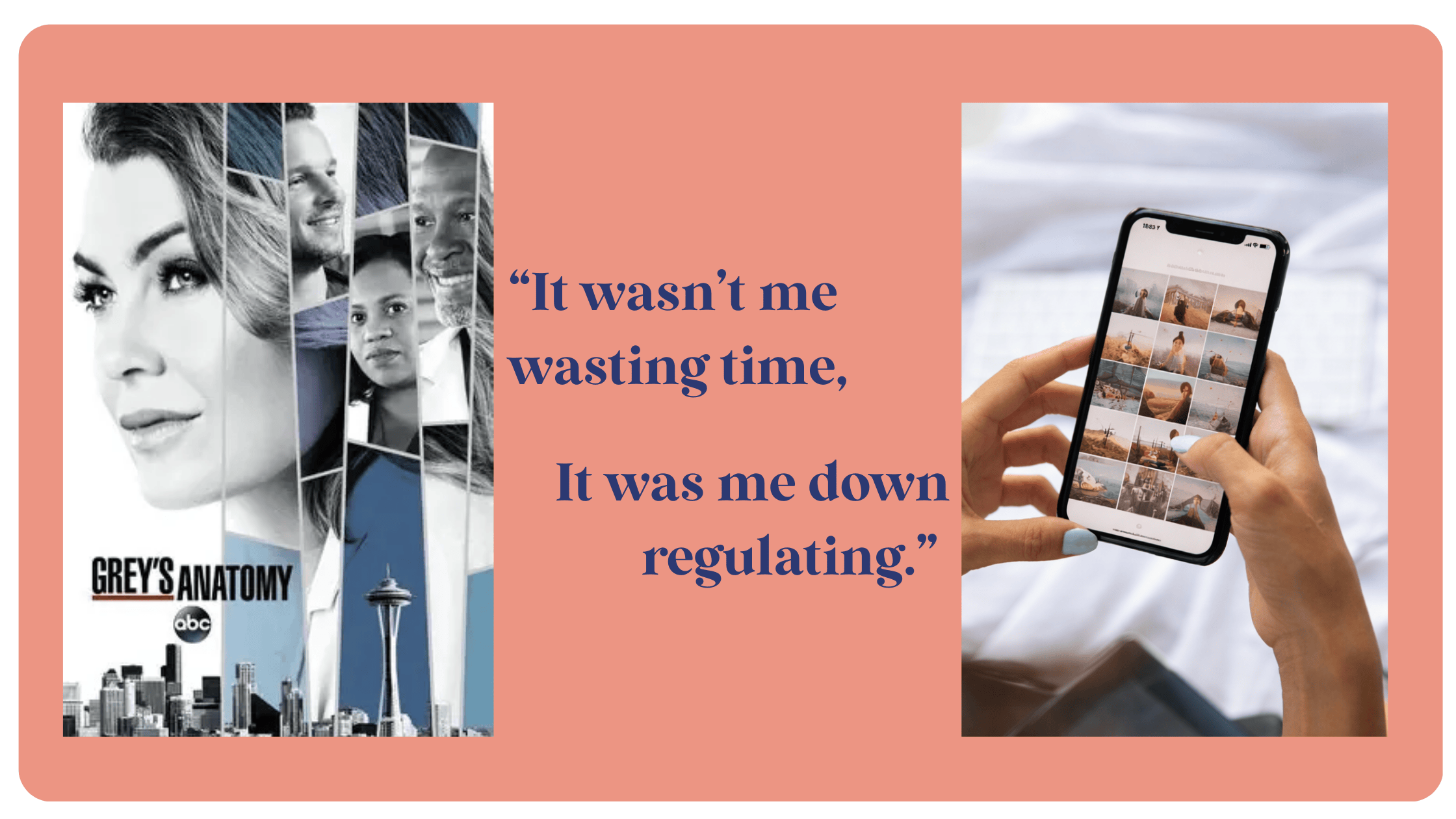
Instead, I spent hours scrolling. Watching old, comforting TV. Letting my mind drift in what felt like a slightly guilty, unproductive haze.
And then something shifted.
When I reflected on it, I realised this wasn’t failure. It wasn’t avoidance.
It wasn’t me wasting time.
It was me down regulating.
The steps we don’t like to admit
There’s a belief, often unspoken, that we should be able to move straight from stress into rest.
From fight or flight straight into meditation.
From overwhelm straight into stillness.
From chaos straight into calm.
But the nervous system does not work like that.
There are steps in between.
And many of those steps are the ones we tend to judge most harshly.
They can look like:
doom scrolling when you told yourself you wouldn’t
zoning out and then judging yourself for it
watching comfort TV instead of tackling something important
rewatching the same series again and again because it takes less brain power than starting something new
procrastinating by deep cleaning a cupboard you did not even plan to open
opening and closing apps without really knowing what you are looking for
endlessly scrolling shopping sites long past the point of enjoyment
These are not the destination.
But they can be part of the descent.
My bed making ritual
For me, one of these moments shows up in a way that might sound ordinary at first.
I have a quirk about making the bed.
It is not unusual. Many of us do it. It is a daily reset. A tidy up. A task that signals completion.
But I have noticed something deeper.
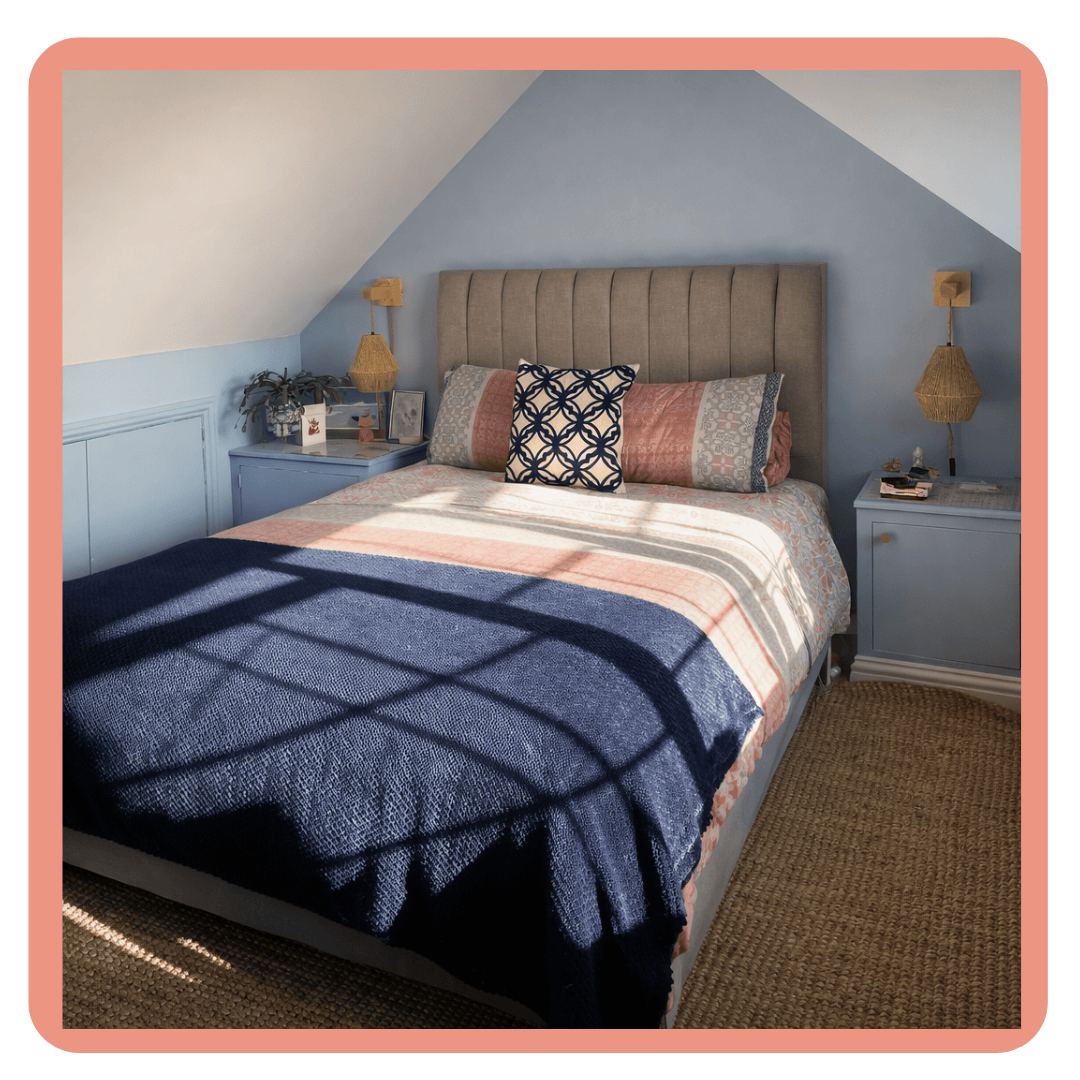
I am particularly bothered when it does not get done properly. I like it neat. Smooth. Symmetrical. Exactly how I like it. In the past, I might have judged that as controlling, nit picky, or overly detail focused.
But when I stopped the internal narrative and turned it into curiosity, I saw something different.
It is a ritual.
It is a moment where I can forget everything else and follow a familiar pattern. The same movement. The same sequence. The same satisfying completion every single time.
When I am stressed, I feel the pull towards it more strongly.
And sometimes I even beat myself up for stopping to do it instead of getting on with my day.
But something in me must know.
Something in me reaches for it as a soothing action.
It is not about perfection. It is about regulation.
It is one or two steps down the ladder. Just enough to feel a little more balanced.
And later, when I return to my room and see the sun streaming through the window, casting beautiful shadows across a calm, tidy space, I notice the difference.
The room feels like a sanctuary. A safe space. A quiet exhale waiting for me.
That ritual did not waste time.
It created it.
Stepping down the ladder
We talk a lot about climbing ladders. Stepping up. Pushing forward.
We almost never talk about stepping back down.
But down regulation is a descent. A gradual one.
You cannot climb down from the top rung in one jump without hurting yourself.
You have to step.
This is something I see reflected in my work too, though I will keep this brief. Coming to a sound bath does not begin when you lie down. It begins much earlier.
It begins with the confirmation email.
The reminder message.
The tone of the words.
The images you see.
The way the room is arranged.
The lighting.
The warmth.
All of these are cues.
They quietly say, we are on our way.
You are not expected to leap from chaos straight into calm. You are guided there.
So why do we deny ourselves that same gentleness in daily life?
The In Between
Some behaviours become difficult when they begin to interfere with daily life. That is a different conversation.
What I am speaking about here is something quieter.
The habits we tend to criticise in ourselves.
The ones we label as time wasting, unproductive, avoidant.
The behaviours that come with guilt attached.
The in between states.
Do you sit in the car for a few minutes before going inside?
I do.
Do you stand and stare out of the window for no clear reason?
Me too.
Some of us crave stillness. Some regulate through movement. Some need repetition. Some need familiarity.
Sometimes it is just a nervous system doing what it knows how to do.

From accidental to intentional
What if we made these moments purposeful instead of accidental?
What if, instead of scrolling with guilt, we paused and asked:
What am I trying to soothe right now?
Where am I on the ladder?
What would help me take just one small step down?
Down regulating is not meant to be a permanent residence. It is a transition.
But when we do not recognise it, we either get stuck there or fight it so hard we never truly rest.
Some rewatch sitcoms.
Some tidy drawers.
Some make the bed.
It is all the same mechanism.
The cost of always holding it together
So many of us are expending huge amounts of energy just holding ourselves up. Staying switched on. Staying productive. Staying strong.

That constant boss energy is exhausting.
Often, what looks like laziness is actually fatigue.
What looks like avoidance is often a body asking for safety before it can soften.
Down regulating asks us to loosen control.
That is not weakness.
It is wisdom.
A different way to think about rest
This is just the beginning of this idea for me. There is more to explore here, and I will come back to it.
But for now, I want to offer this reframe:
Down regulating is not doing it wrong.
It is doing the step before the next step.
The step that makes the next one possible.
So next time you find yourself scrolling, zoning out, reorganising a cupboard, or staring out of the window at nothing in particular,
Maybe pause.
Maybe ask gently.
Maybe let yourself step down the ladder without judgement.
And then, when you are ready, take the next step.
Not because you forced it.
But because your system is ready.
